Types of Bucket Handle Making Machines for Different Applications
Bucket handles are used across paint buckets, plastic pails, cans, drums, and other containers. Because handle designs and production requirements can vary, manufacturers may need different types of bucket handle making machines for different applications. Selecting the right machine starts with understanding the required handle design, wire specifications, production volume, and finishing process. 1. Paint Bucket Handle Making Machine Paint buckets and cans commonly require wire handles designed according to the container size and application. A paint bucket handle making machine is designed for producing handles used with paint and coating containers. The machine configuration can depend on factors such as wire diameter, handle dimensions, and required production output. 2. Automatic Bucket Handle Making Machine An automatic bucket handle making machine combines multiple production operations into an automated workflow. Depending on the configuration, operations may include: Wire feeding Straightening Cutting Bending Forming Finishing Automation can help reduce repetitive manual operations and improve production consistency. 3. Wire Bucket Handle Making Machine Wire handles are produced by forming metal wire into the required shape. The appropriate machine depends on wire diameter, material, handle dimensions, and forming requirements. This type of machinery can be used for different container and packaging applications. 4. Custom Bucket Handle Machines Some manufacturers require handles with unique dimensions, shapes, or finishing requirements. In such cases, a customized machine configuration may be considered. Before ordering customized machinery, manufacturers should provide handle drawings, wire specifications, production requirements, and details of any special operations. How to Select the Right Machine? The right machine depends on your specific manufacturing requirements. Before making a decision, consider: Handle design: What shape and dimensions are required? Wire: What material and diameter will be processed? Production volume: How many handles are required per hour or day? Automation: Which production operations need to be automated? Finishing: Are notching or other additional operations required? Support: What installation, maintenance, and technical assistance will be needed? Bucket Handle Machine Manufacturer in India Ramji Engineering Works manufactures wire-forming and wire-processing machinery for applications including bucket handles and other wire-formed components. Manufacturers can discuss their product design, wire specifications, production capacity, and customization requirements to determine a suitable machine configuration. Conclusion Different bucket handle applications can require different machine configurations. Whether you need equipment for paint bucket handles, automatic production, wire forming, or a customized application, the machine should be selected according to the actual production requirements. Understanding the handle design, wire specifications, production volume, and automation requirements can help manufacturers choose a suitable bucket handle making machine for their production process.
Bucket Handle Making Machine Price: Factors That Affect Cost
If you are planning to start or expand bucket handle production, one of the first questions is usually about the bucket handle making machine price. However, there is no single price that applies to every machine. The overall cost depends on the machine configuration, automation level, production requirements, and handle design. Understanding these factors can help manufacturers compare machines more effectively and select equipment according to their actual production needs. What Determines Bucket Handle Machine Price? 1. Machine Configuration Different bucket handles may require different forming, bending, cutting, or finishing operations. A machine designed for a specific handle configuration may have different features and components from a more basic setup. 2. Level of Automation Automation can influence the overall machine cost. Systems with automated wire feeding, cutting, bending, and forming may require more advanced controls and mechanisms. Manufacturers should select the automation level based on their production volume and workflow rather than choosing features they do not require. 3. Production Capacity The required production volume is another important consideration. Manufacturers producing handles in larger quantities may require equipment designed for continuous or higher-volume production. 4. Wire Specifications Wire diameter and material can affect machine configuration. Before requesting a quotation, manufacturers should provide accurate information about the wire they intend to process. 5. Handle Design Handle dimensions, shape, grip requirements, and finishing operations can influence the machine configuration. Customized handle designs may require specialized tooling or machine adjustments. Should You Choose the Cheapest Machine? Price should not be the only factor when purchasing industrial machinery. A machine should be evaluated based on its suitability for the required production process, expected output, operating requirements, maintenance, and technical support. A lower initial cost may not provide the right solution if the machine cannot meet your production requirements. How to Get an Accurate Machine Quotation To receive a more accurate quotation, manufacturers should provide: Handle drawings or dimensions Wire diameter and material Required production quantity Handle design Required automation level Special forming or finishing requirements Delivery location Providing these details helps the manufacturer understand the application before recommending a suitable configuration. Bucket Handle Making Machine Manufacturer in India Ramji Engineering Works manufactures wire-forming and wire-processing machinery for industrial applications, including bucket handle production. Manufacturers can discuss their handle design, wire specifications, production requirements, and customization needs to identify a suitable machine configuration. Conclusion The bucket handle making machine price depends on several factors, including machine configuration, automation, production capacity, wire specifications, and handle design. Instead of comparing machines only by price, manufacturers should compare their technical capabilities, suitability, support, and long-term production requirements. A properly selected machine can provide a more reliable foundation for efficient bucket handle manufacturing.
How to Choose the Right Bucket Handle Making Machine
Choosing the right bucket handle making machine is an important decision for manufacturers of paint buckets, pails, cans, drums, and other containers. The right machine should match your handle design, wire specifications, production volume, and automation requirements. Instead of selecting a machine based only on price, manufacturers should evaluate several technical and production factors before making a decision. 1. Understand Your Handle Design Start by defining the exact type of handle you need to manufacture. Consider the handle’s: Length and width Shape and curvature Wire diameter Grip type End formation Notching requirements Different handle designs may require different machine configurations. Having accurate product specifications makes it easier to identify suitable machinery. 2. Check Wire Specifications Wire is the primary raw material used in bucket handle production. The required wire diameter and material can vary depending on the application. Before purchasing a machine, confirm that it can process the wire specifications required for your products. This is particularly important when manufacturing handles for different types of buckets or containers. 3. Consider Production Capacity Production requirements are another important factor. A manufacturer producing a small number of handles may have different requirements from a large-scale packaging company. Estimate your required production volume per hour, shift, and day. This information can help determine the appropriate machine configuration and level of automation. 4. Decide the Required Automation Level Bucket handle machines can be designed with different levels of automation. Automated wire feeding, cutting, bending, and forming can reduce repetitive manual operations and improve production consistency. When selecting a machine, consider which operations you want to automate and how the machine will fit into your existing production process. 5. Look for Customization Options Not every manufacturer produces the same type of bucket handle. If your product has specific dimensions or a unique design, customization may be required. Discuss your handle drawings, wire specifications, production requirements, and finishing needs with the machine manufacturer before finalizing the equipment. 6. Evaluate Technical Support Machine performance depends not only on the equipment but also on installation, operation, maintenance, and technical support. Before purchasing, ask about: Installation and commissioning Operator training Spare parts Maintenance support Troubleshooting assistance After-sales service Reliable technical support can help manufacturers maintain smoother production over the long term. 7. Consider Future Production Requirements Your current production requirement may increase in the future. Therefore, consider whether the selected machine can support your expected growth. A machine that matches both current and future requirements can help avoid unnecessary equipment changes as production expands. Why Choose an Experienced Machine Manufacturer? An experienced bucket handle making machine manufacturer can help evaluate your product requirements and recommend a suitable machine configuration. Ramji Engineering Works manufactures wire-forming and wire-processing machinery, including solutions for bucket handle production. The company works with different handle designs and production requirements to provide suitable machinery for industrial applications. Conclusion Selecting the right bucket handle making machine requires careful evaluation of handle design, wire specifications, production capacity, automation, customization, and technical support. Manufacturers should clearly define their requirements before comparing machines. A properly selected machine can help create a more consistent, efficient, and scalable bucket handle production process.
Bucket Handle Manufacturing Process: From Wire to Finished Handle
Bucket handles are widely used in paint buckets, plastic pails, cans, drums, and industrial containers. Producing these handles consistently requires accurate wire processing and forming. A modern bucket handle manufacturing process can combine several operations into a streamlined production cycle. For manufacturers, understanding each stage helps in selecting suitable machinery and maintaining consistent product quality. 1. Wire Selection The manufacturing process begins with selecting the appropriate wire according to the required handle design. Wire diameter, material, strength, and finish can vary depending on the application and container type. The selected wire should be compatible with the forming and cutting requirements of the production machine. 2. Wire Feeding The wire is supplied to the forming machine through a controlled feeding system. Consistent feeding is important because irregular wire movement can affect cutting accuracy and the final handle shape. Automated feeding can help maintain a stable production process and reduce repetitive manual handling. 3. Wire Straightening Coiled wire naturally contains bends and curves. Before it can be accurately formed, the wire is passed through a straightening system. Proper straightening prepares the wire for accurate cutting and bending and helps maintain consistency between finished handles. 4. Wire Cutting Once the wire has been straightened, it is cut according to the required handle dimensions. Accurate cutting is essential because the length of the wire directly affects the final size and shape of the handle. Automated cutting can help manufacturers maintain consistent lengths throughout production. 5. Bending and Forming The cut wire is then bent into the required handle shape. Depending on the product design, the forming process may involve multiple controlled bends. This stage determines important characteristics such as the handle’s width, height, curvature, and overall geometry. 6. Finishing Operations Some handle designs require additional operations such as notching or specific end formations. These processes help prepare the handle for fitting or assembly with the container. The exact finishing requirements depend on the handle design and application. Benefits of Automated Bucket Handle Manufacturing Automation can bring several advantages to manufacturers producing handles in regular or large quantities. Consistent Production Automated feeding, cutting, bending, and forming can help maintain consistent handle dimensions across production batches. Improved Productivity Integrating multiple operations into a machine can create a smoother production workflow and reduce repetitive manual tasks. Reduced Manual Handling Automation minimizes the need for operators to manually perform every cutting and forming operation. Better Production Control Manufacturers can work with defined machine settings and production parameters to achieve repeatable results. Choosing the Right Bucket Handle Making Machine The ideal machine depends on several factors, including: Wire diameter and material Handle dimensions Handle shape and design Required production volume Automation level Finishing requirements Customization needs Ramji Engineering Works manufactures wire forming and wire processing machinery, including bucket handle making machines designed to automate operations such as wire feeding, straightening, cutting, bending, and handle forming. The company states that its machines can be customized according to product dimensions and production requirements. Conclusion A well-planned bucket handle manufacturing process combines suitable wire material with accurate feeding, straightening, cutting, bending, and forming operations. For manufacturers looking to improve production consistency and reduce repetitive manual work, automated wire-forming machinery can provide a more streamlined production setup. Before selecting machinery, manufacturers should evaluate their handle design, wire specifications, production volume, and customization requirements to identify the right manufacturing solution.
Automatic Bucket Handle Making Machine: Benefits for Manufacturers
Manufacturing bucket handles at scale requires accuracy, consistency, and an efficient production process. As demand increases, manufacturers often look for ways to reduce repetitive manual operations and improve production workflow. An automatic bucket handle making machine can help streamline several stages of wire-handle production. What Is an Automatic Bucket Handle Making Machine? An automatic bucket handle making machine is designed to perform multiple wire-processing operations required to produce bucket handles. Depending on the machine configuration, these operations can include wire feeding, straightening, cutting, bending, and forming. By automating repetitive processes, manufacturers can establish a more consistent production workflow and reduce dependence on manual handling. How Does It Work? The basic production process generally involves: Wire Feeding: Wire is continuously supplied to the machine. Straightening: The wire is straightened before forming. Cutting: Wire is cut according to the required handle dimensions. Bending: The cut wire is bent into the required shape. Forming: The final handle shape is produced according to the required design. The exact process and machine configuration depend on the handle type, wire specifications, and production requirements. Benefits of Automatic Production Consistent Handles Automated cutting and forming can help maintain more consistent handle dimensions and shapes across production batches. Improved Productivity Automation can streamline repetitive manufacturing operations and support higher production requirements. Reduced Manual Work Multiple processes can be integrated into one machine, reducing repetitive manual operations. Better Production Control Manufacturers can work with defined machine settings and production parameters to achieve repeatable results. Suitable for Different Applications Depending on the machine design, automatic wire-forming equipment can be used for handles required for paint buckets, pails, cans, drums, and other containers. Automatic vs Manual Bucket Handle Production Manual production may be suitable for limited requirements, while automated machinery can be more useful for manufacturers handling regular or larger production volumes. Before choosing an automatic bucket handle machine, manufacturers should consider: Required production volume Wire diameter and material Handle dimensions Handle design Level of automation Customization requirements Machine maintenance and technical support Choosing the Right Bucket Handle Machine There is no single machine configuration suitable for every manufacturer. The right solution depends on the required handle design, wire specifications, production volume, and manufacturing process. An experienced bucket handle making machine manufacturer can evaluate these requirements and recommend an appropriate machine configuration. Conclusion An automatic bucket handle making machine can help manufacturers create a more organized and consistent production process. Automated wire feeding, cutting, bending, and forming can reduce repetitive manual work while improving production control. Before investing in machinery, manufacturers should clearly define their handle specifications, production requirements, automation needs, and technical support expectations.
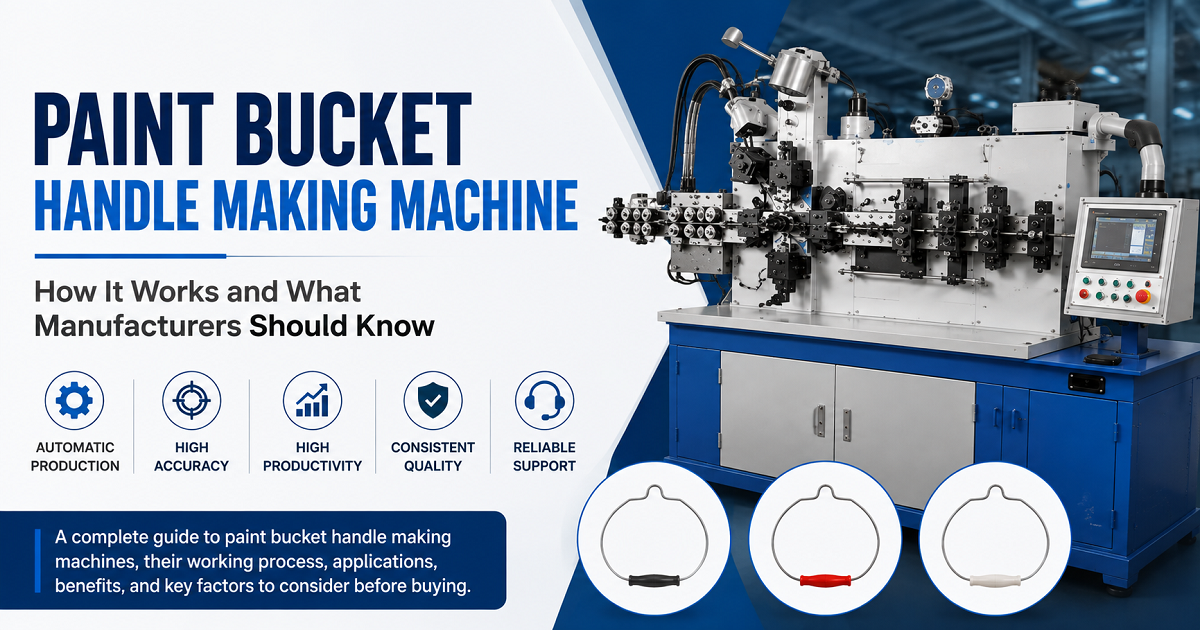
Paint Bucket Handle Making Machine: How It Works and What Manufacturers Should Know
Paint buckets and cans require strong, accurately formed handles for convenient handling, transportation, and storage. As production volumes increase, manually manufacturing these handles can become difficult to manage consistently. A paint bucket handle making machine provides an automated solution for producing wire handles with repeatable dimensions and shapes. For paint, coating, chemical, and industrial packaging manufacturers, choosing the right machine depends on factors such as wire specifications, handle design, production requirements, and the desired level of automation. What Is a Paint Bucket Handle Making Machine? A paint bucket handle making machine is specialized equipment designed to manufacture wire handles used with paint buckets, paint cans, coating containers, and other industrial packaging products. The manufacturing process can combine several operations, including wire feeding, straightening, cutting, bending, shaping, and handle forming. By automating these repetitive processes, manufacturers can improve production consistency and reduce dependence on manual operations. How Does a Paint Bucket Handle Machine Work? The exact process depends on the machine configuration and required handle design. However, the basic production process generally includes several stages. 1. Wire Feeding The machine starts by feeding wire into the processing system. Consistent wire feeding helps maintain accuracy during the subsequent manufacturing stages. 2. Wire Straightening Before forming, the wire is straightened to prepare it for accurate cutting and bending. Proper straightening is important for maintaining consistent handle dimensions. 3. Wire Cutting The wire is automatically cut to the required length based on the selected handle design. Consistent cutting helps reduce variations between individual handles. 4. Bending and Shaping After cutting, the wire is bent and shaped according to the required specifications. The forming mechanism determines the final shape and dimensions of the handle. 5. Final Handle Formation The final forming operation completes the required handle geometry. Depending on the design, additional operations such as notching may also be included. Applications of Paint Bucket Handle Machines A paint bucket handle making machine can be used for producing handles for various types of containers. Paint Buckets and Cans Paint manufacturers require handles that match the dimensions and design of their containers. Automated machinery can help produce consistent handles for different paint packaging formats. Coating Containers Handles can also be produced for containers used for coatings and related industrial products. Chemical Containers Industrial and chemical packaging may require specially designed wire handles based on container dimensions and handling requirements. Industrial Packaging The same type of wire-forming technology can be used for other industrial containers where durable and accurately formed handles are required. Benefits of Automated Paint Bucket Handle Production Consistent Handle Dimensions Automated cutting and forming processes can help maintain uniform dimensions and shapes throughout production. Higher Production Efficiency Automation can streamline repetitive manufacturing operations and help manufacturers manage larger production requirements. Reduced Manual Operations By combining multiple wire-processing stages, the machine can reduce repetitive manual handling. Improved Production Accuracy Controlled wire feeding, cutting, bending, and forming can help minimize variations during production. Flexible Manufacturing Machine configurations can be developed according to factors such as wire diameter, handle dimensions, handle shape, and production requirements. What Should Manufacturers Consider Before Buying? Selecting a paint bucket handle making machine requires more than comparing machine prices. Manufacturers should first understand their production requirements. Wire diameter: Confirm the wire size and material required for your handle design. Handle dimensions: Define the required length, width, bends, and overall geometry. Production capacity: Estimate the number of handles required per hour or day. Automation: Determine which operations need to be automated, including feeding, cutting, bending, and forming. Customization: If your paint buckets have a unique handle design, discuss customization requirements with the machine manufacturer. Technical support: Installation, commissioning, maintenance guidance, spare parts, and after-sales support are also important considerations. Paint Bucket Handle Making Machine Manufacturer in India Ramji Engineering Works manufactures wire-forming and wire-processing machinery, including solutions designed for paint bucket handle production. Its Paint Bucket Handle Making Machine is designed to automate major stages such as wire feeding, straightening, cutting, bending, shaping, and final handle forming. The machine can be configured according to requirements such as handle design, wire diameter, dimensions, and production needs. Ramji Engineering Works also provides installation, commissioning, operator guidance, technical support, maintenance guidance, and spare-parts assistance. Conclusion A paint bucket handle making machine can help manufacturers create a more consistent and efficient wire-handle production process. Automated feeding, straightening, cutting, bending, and forming can reduce repetitive manual work while improving production control. Before selecting a machine, manufacturers should evaluate their wire specifications, handle design, production capacity, automation requirements, customization needs, and technical support. Choosing machinery based on these factors can help create a reliable production setup for paint bucket and industrial container handles.
Bucket Handle Making Machine: A Complete Guide for Manufacturers
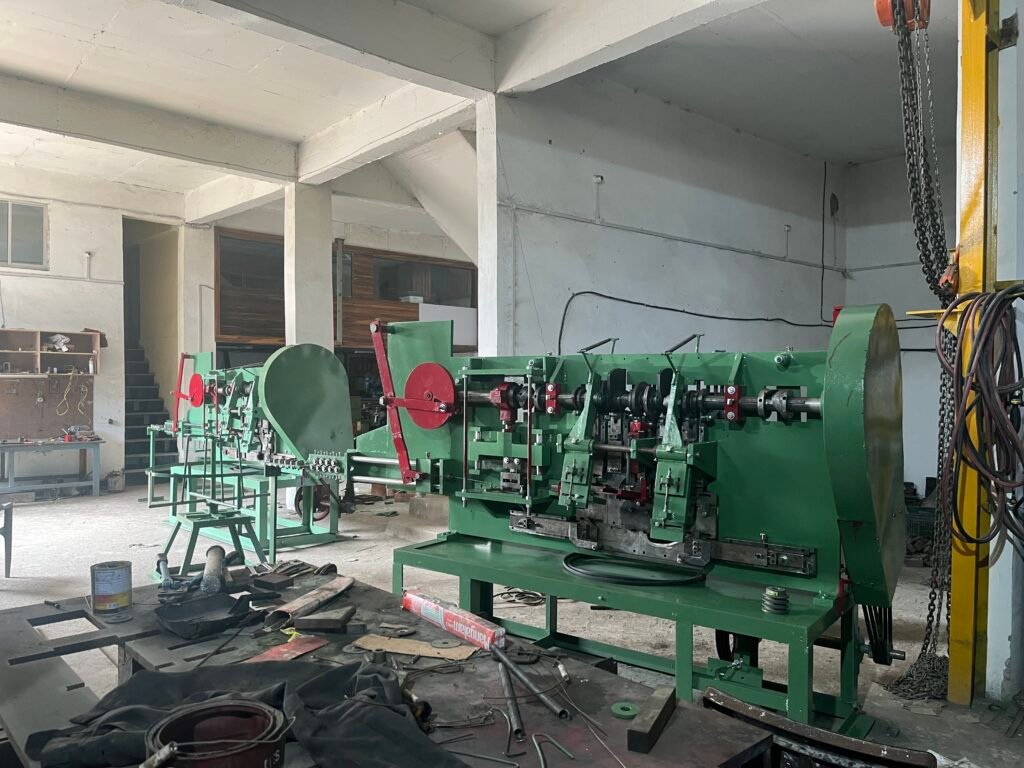
Bucket handles are an important component of paint buckets, pails, cans, drums, and other containers. Although the finished handle may look simple, producing large quantities with consistent dimensions and quality requires an efficient manufacturing process. This is where a bucket handle making machine can help manufacturers improve production efficiency and consistency. In this guide, we explain how a bucket handle making machine works, its applications, benefits, and the important factors to consider before selecting a machine. What Is a Bucket Handle Making Machine? A bucket handle making machine is specialized equipment designed to manufacture wire handles used for different types of buckets, pails, cans, and industrial containers. Depending on the machine configuration, the manufacturing process can include wire feeding, straightening, cutting, bending, forming, and other finishing operations. Automating these repetitive processes can help manufacturers achieve consistent handle shapes and dimensions while improving their overall production workflow. How Does a Bucket Handle Making Machine Work? The exact process depends on the handle design and machine configuration, but the basic process generally involves several stages. Wire Feeding The machine receives wire from a suitable feeding system. Consistent wire feeding is important for maintaining accuracy during subsequent operations. Straightening and Cutting The wire is straightened and cut to the required length. Accurate cutting helps ensure that the finished handles maintain consistent dimensions. Bending and Forming The cut wire is then bent and formed according to the required bucket handle design. Automated forming helps manufacturers produce handles with repeatable shapes. Finishing Depending on the handle design, additional operations such as notching or other finishing processes may be required before the handle is ready for further assembly or use. Applications of Bucket Handle Making Machines Bucket handle machines are used across several industries where wire handles are required for containers and packaging. Paint Industry Paint manufacturers use handles for paint buckets and cans. A paint bucket handle making machine can be used to produce handles according to specific container designs. Packaging Industry Plastic and metal pails often require durable handles for convenient handling and transportation. Chemical Industry Industrial and chemical containers may require specially designed handles based on their size, weight, and application. Industrial Containers Manufacturers producing drums, cans, and other industrial containers can use wire-forming machinery to manufacture suitable handles in required quantities. Benefits of Using a Bucket Handle Making Machine Consistent Quality Automated wire cutting and forming can help maintain consistent handle dimensions and shapes throughout production. Improved Production Efficiency Automation can reduce repetitive manual operations and create a more organized production workflow. Repeatable Production Manufacturers can follow defined machine settings and processes to produce handles with greater consistency between batches. Reduced Manual Work Automating multiple wire-processing operations can reduce the need for repetitive manual handling. Flexible Applications Depending on the machine design, manufacturers can produce different handle shapes and sizes for various buckets, pails, cans, and containers. How to Choose the Right Bucket Handle Machine? Before purchasing a machine, manufacturers should evaluate their specific production requirements. Wire specifications: Check the required wire material and diameter. Handle design: Consider the required shape, dimensions, bends, and finishing operations. Production capacity: Estimate the number of handles required per hour or day. Automation level: Determine whether automatic feeding, cutting, bending, and forming are required. Customization: If your containers require a specific handle design, discuss customization possibilities with the machine manufacturer. Technical support: Installation assistance, spare parts, maintenance, and after-sales service should also be considered. Bucket Handle Making Machine Manufacturer in India Choosing the right machinery manufacturer is important for achieving reliable production. An experienced manufacturer can help evaluate your wire specifications, handle design, production requirements, and automation needs before recommending a suitable machine configuration. Ramji Engineering Works manufactures wire-forming and wire-processing machinery for various industrial applications, including machines designed for bucket handle production. Its range includes solutions for applications such as bucket handles, paint bucket handles, drum handles, jar handles, and other wire-formed components. Manufacturers can discuss their specific requirements with the company to determine a suitable machine for their production process. Conclusion A bucket handle making machine can help manufacturers streamline wire-handle production while maintaining consistent dimensions and repeatable output. From wire feeding and cutting to bending and forming, automated processes can reduce repetitive manual work and improve production efficiency. Before selecting a machine, manufacturers should consider wire specifications, handle design, production capacity, automation requirements, customization, and technical support. Choosing equipment based on these factors can help create a more efficient and reliable bucket handle manufacturing process.